Historical Evolution: Founded in 2004, the Institute of Precision Electrical Measurement Technology and Instruments evolved from the Electromagnetic Measurement Teaching and Research Section established in 1956—the earliest program of its kind in China dedicated to electromagnetic measurement. Currently, the institute is affiliated to the first-level discipline of Instrumentation Science and Technology and the second-level discipline of Measurement and Testing Technology. It obtained the right to confer master’s degrees in Electromagnetic Measurement Technology in 1978, and the right to confer doctoral degrees in Electromagnetic Measurement Technology and Instruments in 1986.
Faculty Team: The institute has 8 full-time faculty members, including 3 professors (all doctoral supervisors), 4 associate professors (2 of whom are doctoral supervisors), and 1 lecturer (master’s supervisor). In addition, there is 1 part-time doctoral supervisor. The institute currently has over 20 doctoral candidates and more than 40 master’s candidates in residence.
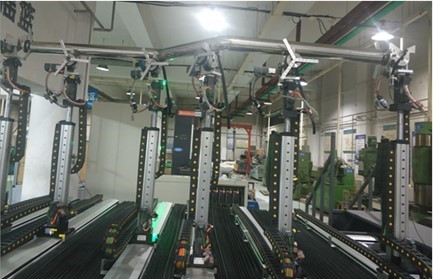
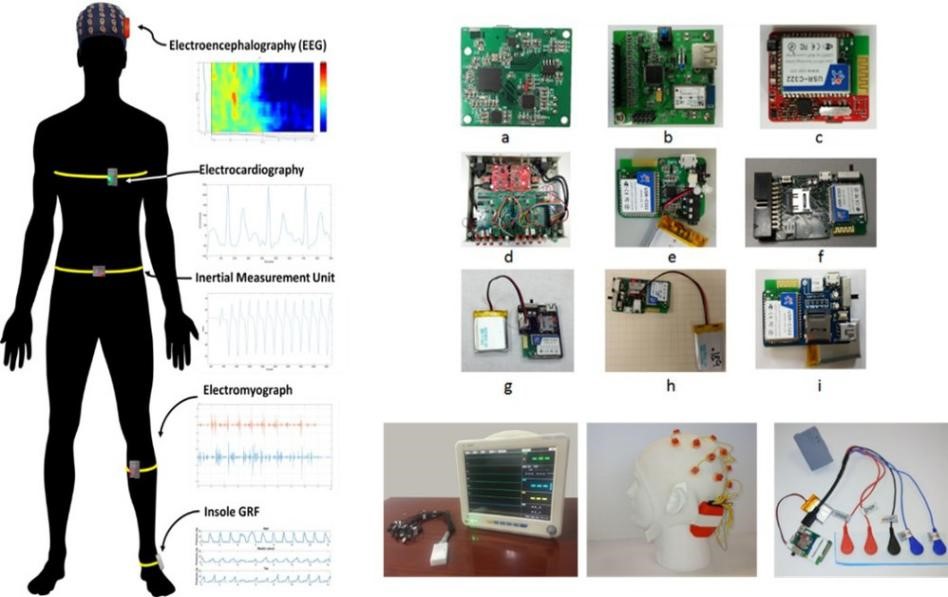
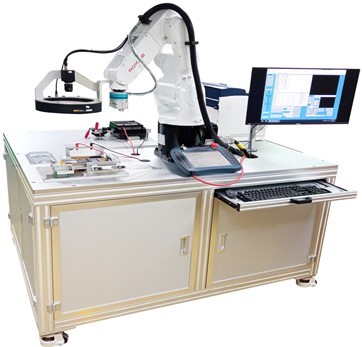
Research Directions: Electrical measurement technology, intelligent control technology, biomedical sensing technology, brain-computer interface technology, artificial intelligence and visual inspection technology, Internet of Things technology, etc.
General Introduction: The institute places great emphasis on basic research and cutting-edge research topics, pursues high-level research outcomes, and actively promotes international cooperation. It has developed several distinctive research directions and academic growth areas, including electrical measurement and control, biomedical sensing technology, artificial intelligence and visual inspection technology, among others. In recent years, the institute has undertaken a large number of research projects, including nearly 30 projects funded by the National Natural Science Foundation of China, over 10 projects supported by the National High Technology Research and Development Program of China (863 Program), key provincial scientific and technological research projects, and international cooperation projects under the National Natural Science Foundation. It has also collaborated on more than 100 projects with aerospace research institutes and industrial enterprises. The research conducted by the institute is characterized by both theoretical significance and practical application value.
The institute has won 1 provincial and ministerial-level First-Class Award and 4 Second-Class Awards. It has filed more than 120 national patent applications, published over 20 monographs, and released more than 400 research papers.
Director: Shiping Zhang
Deputy Director: Qisong Wang